

Navigating Roofing Costs: What You Need to Know
Roofing cost is a major consideration for any homeowner facing roof replacement or repair. Whether you’re in Kansas City or elsewhere, understanding the key factors influencing these costs can help you plan better.
- Average cost: In Kansas City, the average roof replacement for an 1,800 sqft home costs around $7,912.
- Roof material: Materials like asphalt shingles, metal, and slate have varying costs, affecting your total budget.
- Additional factors: Tear-off, disposal, permitting, labor, and roof complexity also contribute to the final price.
My name is Kevin McLaughlin, the owner of Heritage Exteriors LLC with over 30 years of experience in the roofing industry. At Heritage Exteriors, we promise high-quality workmanship and exceptional customer service.
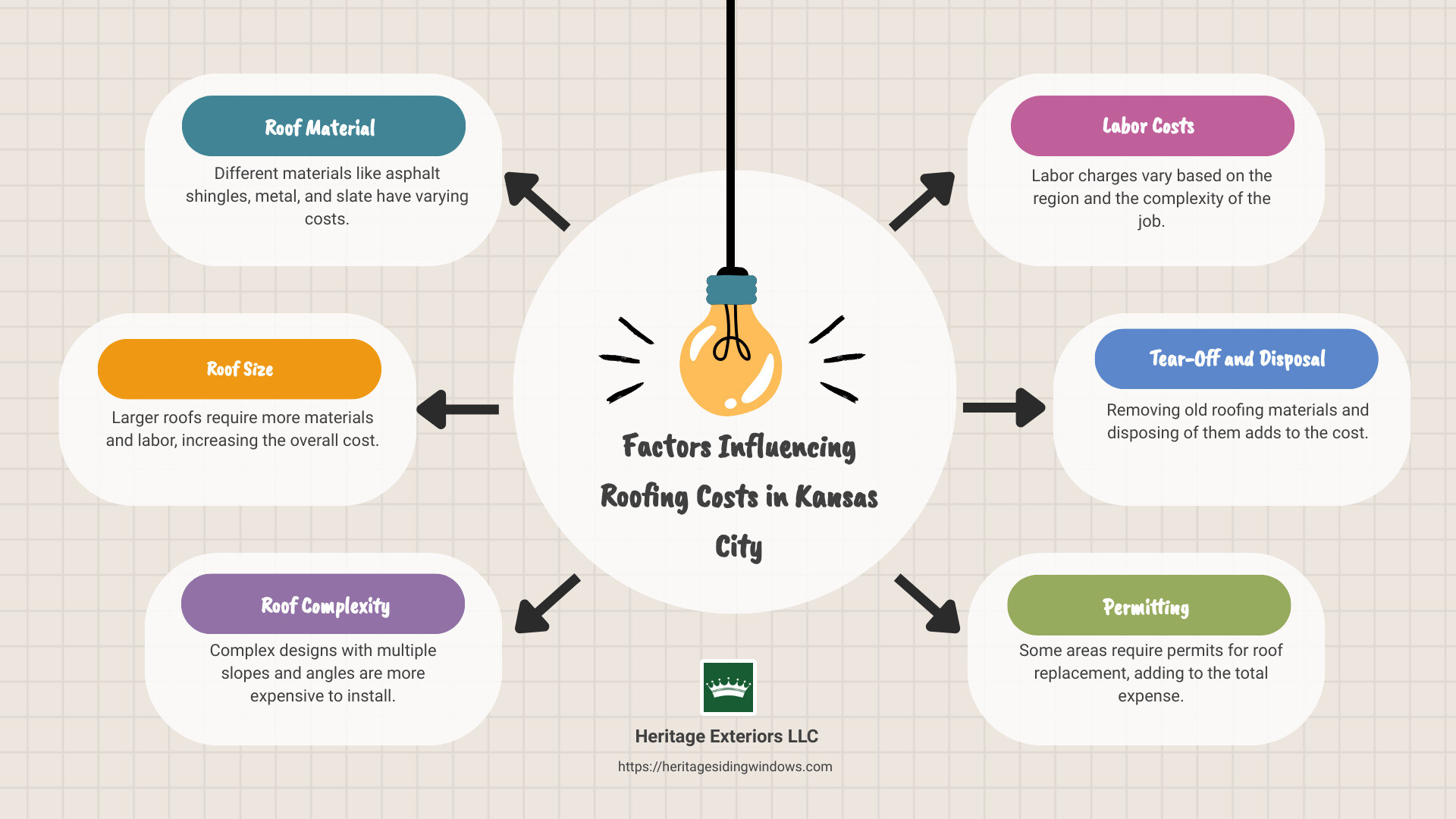
Factors Influencing Roofing Cost
When planning a roof replacement, understand the various factors that influence roofing cost. Here’s a breakdown:
Roof Size
The size of your roof is a significant factor. The larger the roof, the more materials and labor are required. For example, replacing a roof on a 1,800 sqft home costs around $7,912 on average. This cost will vary depending on the exact measurements and intricacies of your roof.
Roof Material
Different roofing materials come with different price tags. Asphalt shingles are the most common and affordable option, but they may not be suitable for all climates. Metal roofs are more durable but can be pricier. Here are some examples:
- Asphalt Shingles: $1 to $5 per square foot
- Metal Roofing: $5 to $14 per square foot
- Tile Roofing: $10 to $30 per square foot
Roof Complexity
The complexity of your roof’s design also impacts the cost. Roofs with multiple angles, dormers, or intricate designs require more labor and materials. A simple gable roof is less expensive to replace than a complex Mansard or Dutch-style roof.
Labor Costs
Labor costs can vary significantly based on your location and the roofing company’s experience. On average, labor for roof installation ranges from $2 to $7 per square foot. Hiring a professional ensures safety and quality but comes at a higher price.
Roof Height
The height of your roof can affect labor costs. Taller buildings require more safety measures, which can increase the overall cost. For example, a two-story home’s roof replacement will generally cost more than a single-story home’s roof.
Roof Pitch
The pitch or steepness of your roof influences accessibility and safety. Steeper roofs are more challenging to work on, requiring specialized equipment and safety precautions. Roofs steeper than a 6/12 slope often cut out DIY options, raising the average cost.
Permitting
Most areas require permits for roof replacements. The cost of permits can vary based on your location. On average, permits can add up to $1,000 to your roofing project. Your contractor should handle obtaining these permits.
Tear-Off and Disposal
Removing and disposing of old roofing materials is another cost factor. Expect to pay around $0.40 to $2 per square foot for tearing off old materials. Disposal fees are often included in labor costs but can be an additional expense.
Miscellaneous Supplies
Other miscellaneous supplies like nails, underlayment, and flashing also contribute to the overall cost. While these items may seem minor, they add up, especially for larger projects.
Understanding these factors helps you plan and budget for your roofing project. Next, we’ll dive deeper into the costs associated with different roofing materials.

Roofing Cost by Material
When it comes to roofing cost, the material you choose plays a huge role. Let’s break down the costs and benefits of different roofing materials.
Asphalt Shingles
Asphalt shingles are the most popular roofing material due to their affordability and ease of installation. Here are the main types:
-
Three-Tab Shingles: These are the most basic and cost-effective option. They have a flat, uniform appearance and typically cost around $1 to $2 per square foot.
-
Architectural Shingles: Also known as dimensional shingles, these have a more textured and layered look. They are more durable than three-tab shingles and cost about $4 to $6 per square foot.
-
Premium Shingles: These are high-end asphalt shingles designed to mimic the look of slate or cedar shakes. They offer superior durability and aesthetic appeal, costing between $5 and $10 per square foot.
Metal Roofs
Metal roofs are known for their longevity and energy efficiency. They can last up to 70 years and often reflect sunlight, reducing cooling costs.
-
Steel Roofs: These are the most affordable metal roofing option, costing between $3 and $6 per square foot. They are durable and can withstand harsh weather conditions.
-
Standing Seam Metal Roofs: This type of metal roofing is more expensive but offers a sleek, modern look. It costs around $7 to $14 per square foot and provides excellent durability and weather resistance.
Flat Roofs
Flat roofs are common in commercial buildings but can also be found in residential homes. They have unique costs and considerations.
-
Flat Roof Replacement: Replacing a flat roof can be more expensive due to the materials and labor involved. Expect to pay between $4 and $9 per square foot for materials like EPDM or TPO.
-
Flat Roof Repair: Minor repairs on flat roofs can be relatively inexpensive, starting at around $150. However, extensive repairs can range from $1,000 to $3,000 depending on the damage.
Premium and Impact-Resistant Shingles
For those in areas prone to severe weather, premium and impact-resistant shingles offer added protection.
-
Premium Shingles: These shingles are designed to withstand harsh weather and have a luxurious look. They cost between $5 and $10 per square foot and offer long-lasting durability.
-
Impact-Resistant Shingles: Ideal for areas with frequent hail or strong winds, these shingles are engineered to resist damage. They are more expensive, costing around $6 to $12 per square foot, but they reduce maintenance and repair costs over time.
Choosing the right roofing material depends on your budget, climate, and personal preferences. Each option has its own set of benefits and costs, so weigh them carefully to make an informed decision. Next, we’ll explore how the size of your roof impacts the overall cost.
Roofing Cost by Size
The size of your roof is one of the biggest factors in determining the overall roofing cost. Here’s a breakdown of what you can expect based on different roof sizes:
1000 Sq Ft Roof
For a 1000 sq ft roof, the cost ranges from $4,700 to $15,000. This price includes both materials and labor. The type of material you choose will heavily influence the final cost. For example, asphalt shingles are on the lower end, while metal roofs can push the cost higher.
1500 Sq Ft Roof
A 1500 sq ft roof typically costs between $7,000 and $20,000. This range takes into account the complexity of the roof and the materials used. Asphalt shingles remain the most economical option, whereas premium materials like slate can significantly increase the cost.
2000 Sq Ft Roof
For a 2000 sq ft roof, expect to pay around $10,000 to $25,000. This broader range is due to the variety of materials and roof complexities. Standard asphalt shingles will be less expensive, while a metal roof will be on the higher end.
2500 Sq Ft Roof
A 2500 sq ft roof will cost between $12,500 and $25,000. The labor cost also increases with the size, as larger roofs require more hours of work. Material choice plays a big role here too, with more durable options like metal or tile roofing pushing the price higher.
3000 Sq Ft Roof
For a 3000 sq ft roof, the cost ranges from $15,200 to $35,000. The price can vary based on roof height, pitch, and complexity. High-end materials like slate or impact-resistant shingles will increase the overall cost.
3500 Sq Ft Roof
The cost for a 3500 sq ft roof typically falls between $16,900 and $35,000. Larger roofs often require more intricate work, especially if they have a steep pitch or multiple features like chimneys or skylights. These factors can add to both material and labor costs.
Pro Tip: Always get multiple quotes from different contractors to ensure you’re getting the best deal. Also, consider the long-term savings of investing in higher-quality materials that require less maintenance.
Understanding the cost associated with different roof sizes helps in planning and budgeting for your roofing project. Next, we’ll delve into how to calculate roofing costs and what elements to consider.
Average Roofing Costs in Different Locations
When it comes to roofing costs, location matters. Let’s look at the average roofing cost in Kansas City, Missouri, Texas, and Central Missouri.
Norfolk County, MA
In Norfolk County, MA, roofing costs can vary due to several factors such as the type of materials used, the size of the roof, and the complexity of the design. Homeowners in this region typically spend between $8,000 and $18,000 for a new roof. This price range covers common materials like asphalt shingles, which are known for their affordability and durability. More premium options, like metal or slate roofs, can increase the costs significantly. Local weather conditions and labor rates also play a crucial role in determining the final expense.
Norfolk County in Massachusetts experiences a variety of weather conditions, from humid summers to cold, snowy winters. These weather changes can affect your roof over time, making it crucial to select materials that can withstand the elements. In Norfolk County, the average cost to replace a roof on an average-sized home (1,800 square feet) is approximately $9,500. Durable roofing materials are key to ensuring long-term protection against the area’s seasonal challenges.
Factors like roof complexity, material choice, and local building codes (such as those requiring materials that can withstand high winds and heavy rain) influence these costs. Popular materials here include metal roofs for their durability and strength against severe weather.
In general, Missouri’s roofing costs can vary depending on the city. For instance, Saint Louis has had 123,644 more roofs scanned than Kansas City, indicating a higher demand and possibly higher costs due to competition and material availability.
Additional factors to consider in Texas include the need for permits, which are generally required for total or partial roof replacements. Disposal of old roofing materials and working around features like chimneys or skylights can also add to the cost.
Understanding the average roofing costs in different locations helps you plan your budget more effectively. Next, let’s explore how to calculate roofing costs and what elements to consider.
How to Calculate Roofing Cost
Calculating roofing cost can seem complicated, but breaking it down into smaller parts makes it easier to understand. Here are the key factors to consider:
Cost Per Square Foot
The first step is to determine the cost per square foot. This is a common way to estimate the total cost. For example, in Kansas City, you can expect to pay between $3.40 and $10.00 per square foot.
Labor and Materials
Labor costs usually account for about 40% to 60% of the total roofing cost. This includes the number of technicians needed, their hourly rate, and the total hours required.
Material costs depend on the type of roofing you choose. Asphalt shingles are generally the most affordable, while metal and tile roofs can be more expensive. For instance, asphalt shingle roofs in Kansas City typically cost between $10,000 to $15,000, while metal roofs range from $17,000 to $23,000.
Roof Complexity
The complexity of your roof also affects the cost. A simple, flat roof is easier and cheaper to replace than a multi-layered, steep roof with chimneys and skylights. Complex roofs require more materials and labor, increasing the overall cost.
Roof Height
The height of your roof matters too. Taller homes are more challenging and dangerous to work on, which can increase labor costs.
Roof Pitch
The pitch of your roof refers to its steepness. Steeper roofs are harder to navigate and require more safety measures, which can also drive up the cost. Roof pitch is usually measured as the number of inches a roof rises vertically over a 12-inch horizontal span. The steeper the pitch, the higher the cost.
To sum it up, calculating the roofing cost involves multiple factors: cost per square foot, labor and materials, roof complexity, roof height, and roof pitch. By understanding these elements, you can get a better estimate and plan your budget more effectively.
Next, we’ll look into common roofing issues and when it’s time to replace your roof.
Common Roofing Issues and When to Replace
Your roof is your home’s first line of defense against the elements. But like all things, it has a lifespan. Knowing when to repair or replace your roof can save you a lot of money and stress. Here are some common roofing issues and signs that it might be time for a replacement.
Leaks and Water Stains
Leaks are often the most obvious sign of roof trouble. If you notice water dripping from your ceiling or water stains on your walls, it’s a clear sign that your roof needs attention.
Small leaks can often be repaired, especially if they are localized around areas like vents or chimneys. However, extensive leaking might indicate a bigger problem, such as widespread shingle damage or underlayment issues, which could require a full roof replacement.
Pest Infestations
Pests like squirrels, birds, or insects can cause significant damage to your roof. They can chew through shingles and create holes, leading to leaks and structural damage.
If you notice signs of pests, such as droppings or nests, it’s crucial to address the issue promptly. Minor infestations might be resolved with repairs, but severe damage may necessitate replacing affected sections or even the entire roof.
Damaged Shingles
Shingles can get damaged over time due to various factors like weather, age, and poor installation. Look out for:
- Missing shingles: Often a result of strong winds or poor installation.
- Cracked or curling shingles: This can be due to aging or extreme weather conditions.
- Granule loss: If you find granules in your gutters, it indicates that your shingles are wearing out.
While a few damaged shingles can be replaced individually, widespread shingle issues often mean it’s time for a new roof.
Storm Damage
Living in areas prone to severe weather, like Kansas City, means your roof is at constant risk of storm damage. Hail, strong winds, and heavy rain can all take a toll on your roof.
After a major storm, it’s wise to inspect your roof for damage. Look for:
- Dented or cracked shingles: Often caused by hail.
- Loose or missing shingles: Typically from high winds.
- Debris on the roof: Branches and other debris can cause additional damage.
If the damage is extensive, a full roof replacement might be the best option to ensure your home remains protected.
When to Replace
Deciding whether to repair or replace your roof depends on several factors:
- Age of the roof: If your roof is nearing the end of its expected lifespan (around 20-25 years for asphalt shingles), replacement is often more cost-effective.
- Extent of damage: Localized damage can usually be repaired, but widespread issues often require replacement.
- Cost considerations: Frequent repairs can add up. Sometimes, investing in a new roof is more economical in the long run.
Understanding these common issues and knowing when to replace your roof can save you from costly repairs and ensure your home remains safe and dry.
Next, we’ll answer some frequently asked questions about roofing cost.
Frequently Asked Questions about Roofing Cost
How much does it cost to replace 1000 sq ft of roof?
Replacing a 1000-square-foot roof can cost between $4,700 and $10,000. This price range depends on several factors, such as the type of roofing material used, labor costs, and the complexity of the roof.
For instance, asphalt shingles, which are the most common and affordable option, will generally be on the lower end of the spectrum. On the other hand, more durable and expensive materials like metal roofs can push the cost towards the higher end.
How much does a new roof cost in Kansas?
In Kansas, the cost of a new roof varies widely based on several factors, including the size of the roof, the materials chosen, and local labor rates. On average, homeowners can expect to pay between $10,000 and $23,000 for roof replacement.
For a more precise estimate, consider getting multiple quotes from local contractors. This will help you understand the specific costs for your area and roofing needs. For example, a 1500-square-foot roof might cost between $5,100 and $15,000 depending on these factors.
How do I calculate the cost of a new roof?
Calculating the cost of a new roof involves several steps:
- Measure the roof area: Multiply the length and width of your roof to get the total square footage.
- Choose your roofing material: Different materials have different costs. For example, asphalt shingles are typically less expensive than metal or premium shingles.
- Consider the roof pitch: Steeper roofs often require more labor and materials, increasing the cost.
- Factor in labor costs: Labor can account for 40-60% of the total cost. This includes the number of technicians, hours required, and their hourly rate.
- Include additional costs: Don’t forget permitting, tear-off, disposal, and any miscellaneous supplies.
On average, you might pay about $7 per square foot for a new roof, but this can vary widely based on the factors mentioned above.
Understanding these aspects will help you get a more accurate estimate and budget accordingly for your roofing project.
Conclusion
When considering a roof replacement, it’s crucial to understand all the factors that influence the roofing cost. From the size and complexity of your roof to the materials you choose, each aspect plays a significant role in the final price.
At Heritage Exteriors LLC, we pride ourselves on delivering high-quality workmanship and exceptional customer satisfaction. With over three decades of experience, our team is fully licensed, insured, and trained to handle a wide range of roofing services. Whether you need a simple repair or a complete roof replacement, we ensure your project is done right the first time.
Choosing the right contractor can save you time, money, and stress. By working with us, you benefit from skilled craftsmanship, timely project completion, and the peace of mind that comes with knowing your home is protected by a durable, well-installed roof.
For more information on our roofing services and to get a comprehensive estimate for your roofing project, visit our roofing services page.
Thank you for considering Heritage Exteriors LLC for your roofing needs. We look forward to providing you with the best possible service and ensuring your home is protected for years to come.
