

Home siding replacement is a critical investment for homeowners aiming to improve their property’s protection, appearance, and energy efficiency. Over time, exposure to the elements can lead to siding damage, affecting your home’s structure and curb appeal. Opting for siding replacement not only shields your dwelling from adverse weather and pest infestation but also lifts its aesthetic value, ultimately increasing market attractiveness.
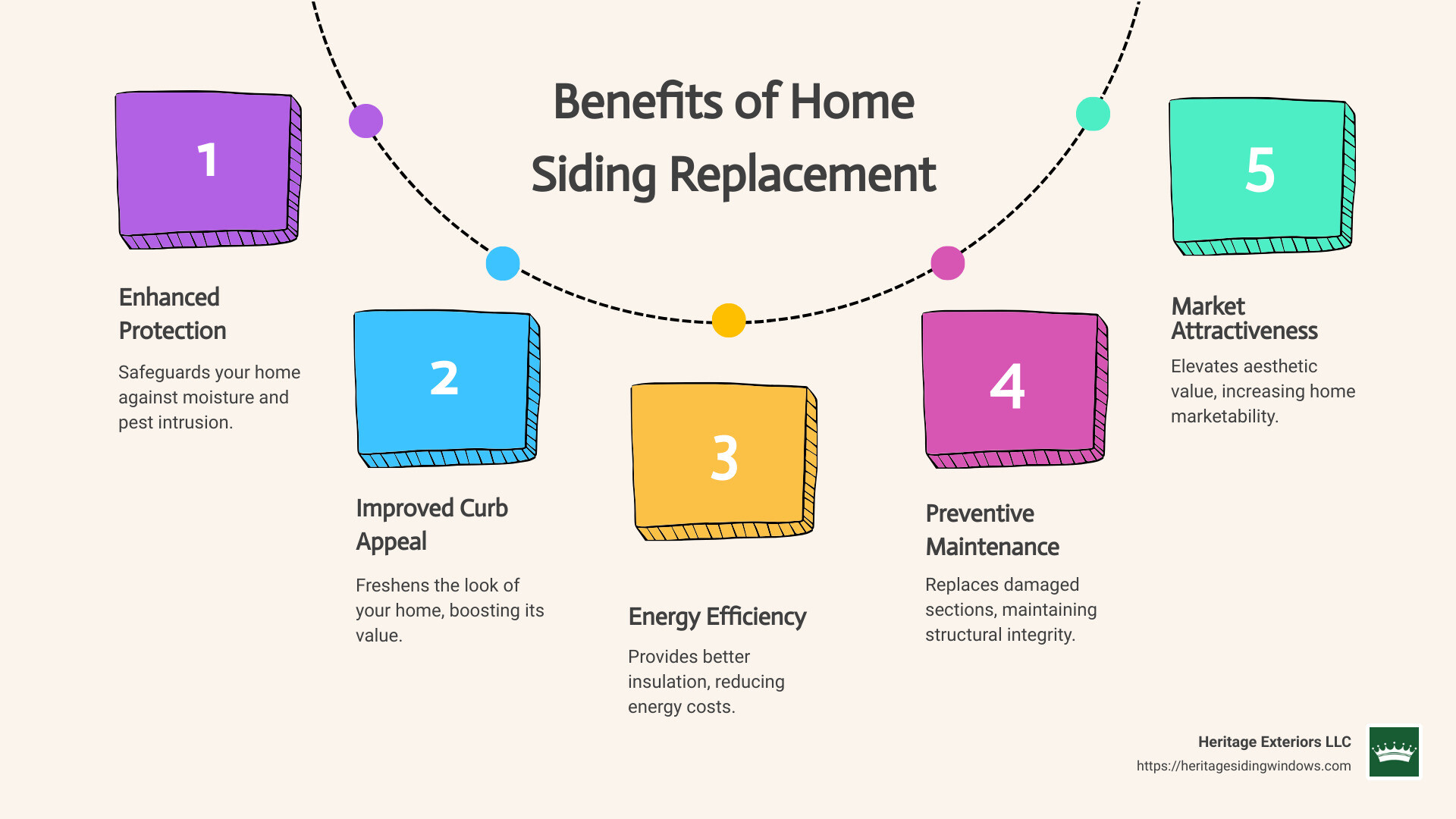
Benefits of home siding replacement include:
- Improved Protection: Safeguards your home against moisture and pest intrusion.
- Improved Curb Appeal: Freshens the look of your home, boosting its value.
- Energy Efficiency: Provides better insulation, reducing energy costs.
- Preventive Maintenance: Replaces damaged sections, maintaining structural integrity.
In my capacity as Kevin McLaughlin, with decades of expertise in the home improvement industry, particularly in home siding replacement, I lead Heritage Exteriors LLC with a commitment to excellence. Our team’s personalized service ensures your home not only looks beautiful but remains resilient against time and weather.
Home siding replacement word list:
– exterior siding
– home siding ideas
Assessing the Need for Home Siding Replacement
Before diving into home siding replacement, evaluate your current siding’s condition. Let’s explore the key factors that indicate it’s time for a change:
Visible Damage
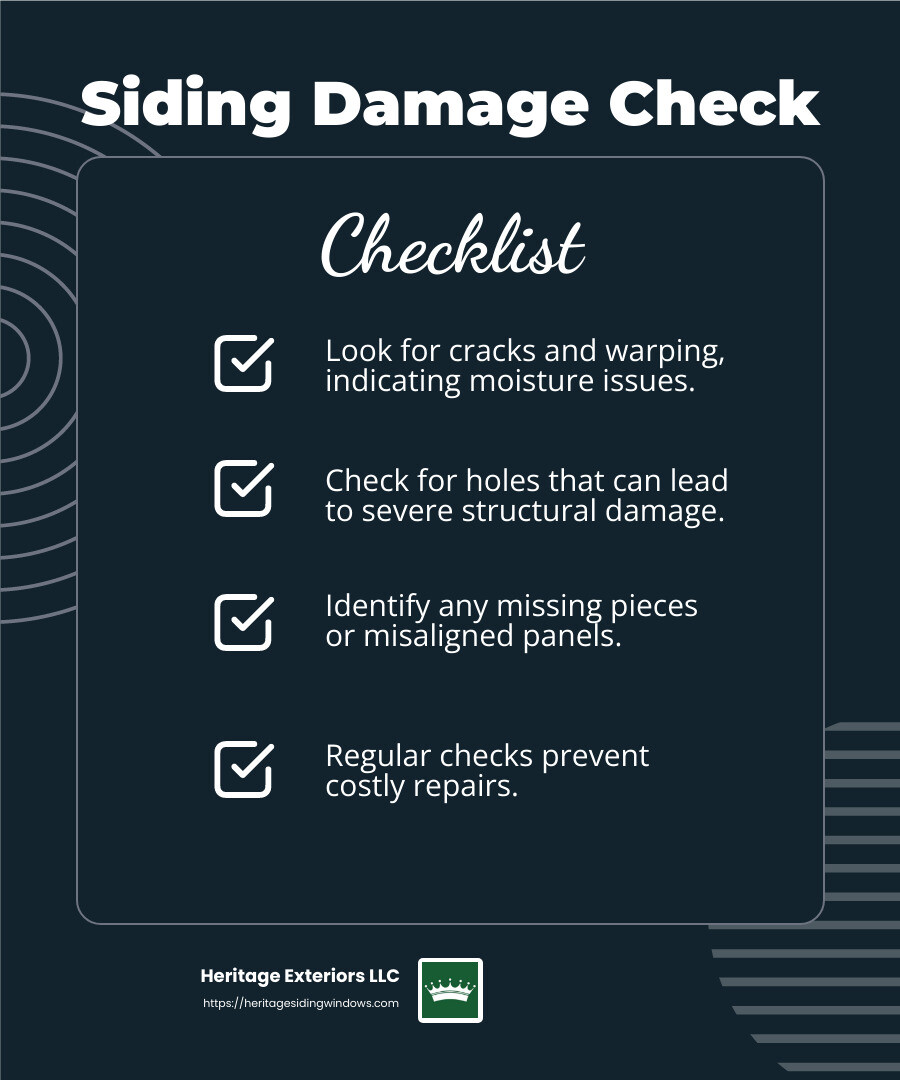
Start by inspecting your siding for visible damage. Look for cracks, warping, or holes. These issues can let moisture seep in, leading to more severe structural damage. Missing pieces or misaligned panels are also red flags. Regular checks can help spot problems early, preventing costly repairs later.
Maintenance Issues
If you’re constantly repainting or repairing your siding, it might be time for a replacement. Frequent maintenance can be both time-consuming and expensive. Modern siding materials, like fiber cement, offer durability and require less upkeep, saving you time and money in the long run.
Lifespan
Consider the age of your siding. Different materials have varying lifespans. For example, vinyl siding typically lasts 10 to 20 years, while fiber cement can last up to 50 years. If your siding is nearing the end of its lifespan, replacing it can prevent future headaches.
Curb Appeal
Your home’s exterior is the first thing people notice. If your siding looks dated or faded, it can impact your home’s curb appeal. Fresh siding can dramatically improve your home’s appearance and increase its market value. This is especially important if you plan to sell your home soon.
Pest Damage
Pests like termites and woodpeckers can wreak havoc on siding. Wood siding is particularly vulnerable to these critters. Choosing a pest-resistant material, such as fiber cement, can prevent infestations and protect your home.
Assessing these factors will help you determine if home siding replacement is necessary. If you notice any of these issues, it’s time to consider upgrading your siding to protect and beautify your home.
Choosing the Right Siding Material
Selecting the right siding material is crucial for both the look and longevity of your home. Let’s explore various options, considering their cost, durability, maintenance, and energy efficiency.
Vinyl Siding
Vinyl siding is a popular choice due to its affordability and low maintenance. It costs approximately $4 to $5 per square foot. Vinyl is available in a wide array of colors and styles, making it versatile for different home designs. While it’s durable, lasting up to 20 years, it may not withstand extreme weather conditions as well as other materials. However, vinyl offers good energy efficiency, helping to insulate your home.
Wood Siding
For a classic and natural look, wood siding is a timeless choice. It can be more expensive than vinyl and requires regular maintenance to prevent rot and insect damage. The cost varies, but it generally provides excellent insulation, enhancing your home’s energy efficiency. Despite its beauty, wood siding is more susceptible to pests and weather damage, leading to higher upkeep costs.
Fiber Cement Siding
Fiber cement siding is known for its incredible durability and resistance to harsh weather conditions. Although installation can be costly, this material can last up to 50 years with minimal maintenance. It’s also fire-resistant and pest-resistant, making it a safe and long-lasting option. Energy efficiency is another benefit, as fiber cement helps maintain a consistent indoor temperature.
Aluminum Siding
Aluminum siding offers a lightweight and durable alternative to traditional materials. It resists rust and pests, requiring little maintenance. While it’s not as common today, aluminum is an economical option, especially in areas prone to moisture. It can, however, dent easily and may not provide the same level of insulation as other materials.
Brick and Stone Siding
Brick and stone siding provide a classic, timeless appearance and are among the most durable options available. They are resistant to fire, pests, and weather damage, often lasting over 50 years. However, this durability comes at a higher cost. Brick and stone siding are more expensive to install but require minimal maintenance, making them a long-term investment. Their energy efficiency is excellent, as they naturally insulate your home.
Choosing the right siding material involves balancing cost, durability, maintenance, and energy efficiency. Each option has its unique benefits, so consider what aligns best with your needs and budget.
Preparing for Siding Replacement
Planning for home siding replacement is essential to ensure a smooth and successful project. This section will walk you through the key steps: removing old siding, conducting inspections, obtaining permits, budgeting, and selecting the right contractor.
Old Siding Removal
Removing the old siding is the first step in the replacement process. This involves carefully taking off the existing material to inspect for any hidden issues beneath, like pest infestations or rot. According to Heritage Exteriors LLC, pest damage is a common problem, especially with wood siding. Termites or woodpeckers can cause significant damage, so it’s crucial to address these issues before installing new siding.
The cost of old siding removal can vary depending on the size of your home and the condition of the existing siding. It’s generally advisable to hire professionals for this task to avoid damaging the structure of your home.
Inspection and Permits
Before you start installing new siding, a thorough inspection is crucial. This involves checking for structural concerns, moisture issues, and ensuring the surface is ready for new siding. Local regulations may require you to obtain permits, which ensure that your project complies with building codes. Permit costs can vary, so check with local authorities or your contractor for specific requirements.
Budgeting for Siding Replacement
Budgeting is a critical part of the home siding replacement process. You need to consider material costs, labor costs, and any additional expenses that might arise, such as repairs to underlying structures. On average, vinyl siding is the most affordable option, while brick or stone siding can be more expensive. Don’t forget to factor in the cost of permits and any necessary repairs identified during the inspection.
A well-planned budget helps avoid unexpected expenses and ensures you can complete the project without financial strain.
Selecting a Contractor
Choosing the right contractor is vital for a successful siding replacement. Look for a contractor with a solid reputation and experience in siding projects. Check reviews and ask for recommendations from friends or family. Heritage Exteriors LLC is known for its expertise and quality workmanship. It’s important to get multiple quotes to compare prices and services offered. When reviewing quotes, consider not just the cost but also the contractor’s experience and the materials they recommend.
Selecting a reputable contractor ensures your project is completed to a high standard, reducing the risk of future issues.
Step-by-Step Guide to Installing New Siding
Preparation
Before diving into the installation of new siding, preparation is key. Begin by measuring the exterior walls of your home accurately. This ensures you purchase the right amount of materials, saving time and money. Use a tape measure to get precise dimensions for each wall, noting any windows, doors, or other features that require special attention.
Cutting the siding to fit these measurements is the next step. For vinyl siding, a utility knife or tin snips will do the job. If you’re working with heavier materials like fiber cement, a circular saw with a carbide blade may be necessary. Always double-check your cuts to avoid wastage.
Safety precautions are vital throughout this process. Wear protective gloves and goggles to prevent injuries from sharp tools or flying debris. If you’re working on a ladder, ensure it’s stable and positioned correctly to prevent falls.
Installation
With your materials prepped, it’s time to start the installation. Here’s a simple step-by-step process to guide you:
- Start at the Bottom: Begin installing the siding at the bottom of the wall. This provides a firm base and ensures the pieces interlock properly. Use a level to keep your first row straight.
- Overlap Each Piece: For vinyl siding, overlap each piece by at least an inch, as recommended by most manufacturers. This helps maintain a watertight seal.
- Nailing: Use galvanized steel nails with a minimum 3/8” head. Drive nails through the center of the nailing slots, leaving a small gap to allow for expansion and contraction. Do not hammer the nails all the way in; leave a tiny space for movement.
- Interlocking: Modern siding often features interlocking technology. Ensure each new piece locks into the one below it. This is crucial for maintaining weather resistance.
Tools needed for this process include a hammer, level, utility knife, and a zip tool for vinyl siding. A common mistake is nailing the siding too tightly, which can cause buckling. Siding needs room to expand and contract with temperature changes.
Finishing Touches
Once the siding is installed, it’s time for the finishing touches. Begin by sealing any gaps or joints with paintable exterior caulk. This prevents moisture intrusion and improves durability.
If your siding requires painting, choose a high-quality exterior acrylic paint. This step not only protects your siding but also gives your home a fresh look. Make sure the weather is dry when you paint, as humidity can affect the finish.
Finally, conduct a final inspection. Walk around your home, checking for any loose pieces or gaps. Ensure all sections are securely fastened and properly aligned. This inspection is crucial to catch any issues early, preventing costly repairs down the line.
By following these steps, you can achieve a successful home siding replacement that improves your home’s appearance and protects it from the elements. In the next section, we’ll address common questions about siding replacement to further guide you through this process.
Frequently Asked Questions about Home Siding Replacement
Is it worth replacing siding on a house?
Replacing the siding on your house can be a wise investment. According to the 2023 Remodeling Cost vs. Value report, new siding can add up to $17,000 to your home’s resale value, representing an 89% return on investment. This makes it a great way to boost curb appeal and protect your home from the elements. Additionally, new siding can improve energy efficiency, potentially lowering utility bills. If your current siding is damaged, outdated, or high-maintenance, investing in a replacement can save you time and money in the long run.
How much does it cost to replace one piece of siding?
The cost to replace a single piece of siding depends on the material. Vinyl siding is the most budget-friendly option, with replacement costs typically ranging from $3 to $7 per square foot. Wood siding is more expensive, costing $5 to $10 per square foot. If you have fiber cement siding, expect to pay between $6 and $12 per square foot. These figures include both the material and labor costs. That prices can vary based on your location and the complexity of the job. It’s always a good idea to get multiple quotes from contractors to ensure you’re getting a fair price.
What is the cheapest way to redo siding?
To redo siding on a budget, vinyl siding is usually the most cost-effective option. It offers a good balance of affordability, durability, and low maintenance. Vinyl siding is available in a variety of colors and styles, allowing you to achieve the look you want without breaking the bank. If you’re handy, you might consider doing the installation yourself to save on labor costs. However, be cautious, as improper installation can lead to issues like water damage. Ensure you have the right tools and follow installation guidelines carefully. Always weigh the cost savings against the potential risks of DIY installation.
Conclusion
In summary, replacing your home siding is not just about aesthetics; it’s an investment in your property’s future. New siding improves curb appeal, boosts your home’s value, and offers protection against the elements. It can also improve energy efficiency, potentially reducing utility bills. Whether it’s fixing visible damage or simply updating an outdated look, the benefits of home siding replacement are substantial.
At Heritage Exteriors LLC, we pride ourselves on delivering exceptional value and customer experience. Our systems approach ensures that every siding project is completed with precision and care. We offer a range of siding materials to suit your needs, from vinyl to fiber cement, each chosen for their durability and low maintenance.
Ready to transform your home’s exterior with us? Contact Heritage Exteriors LLC today to discuss your siding options and schedule a consultation. Let us help you protect and beautify your most significant investment—your home.
