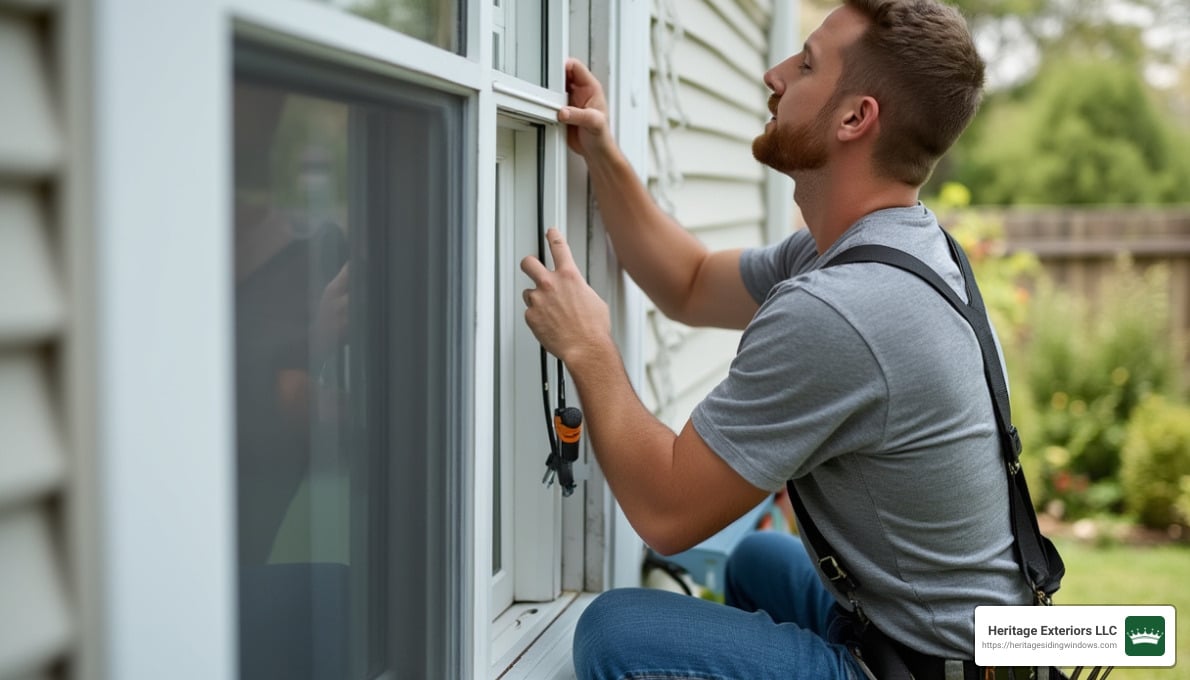

Window replacement cost is a key consideration for homeowners looking to improve their property’s curb appeal and energy efficiency. While replacing windows is a significant investment, it’s driven by several factors that you should be aware of:
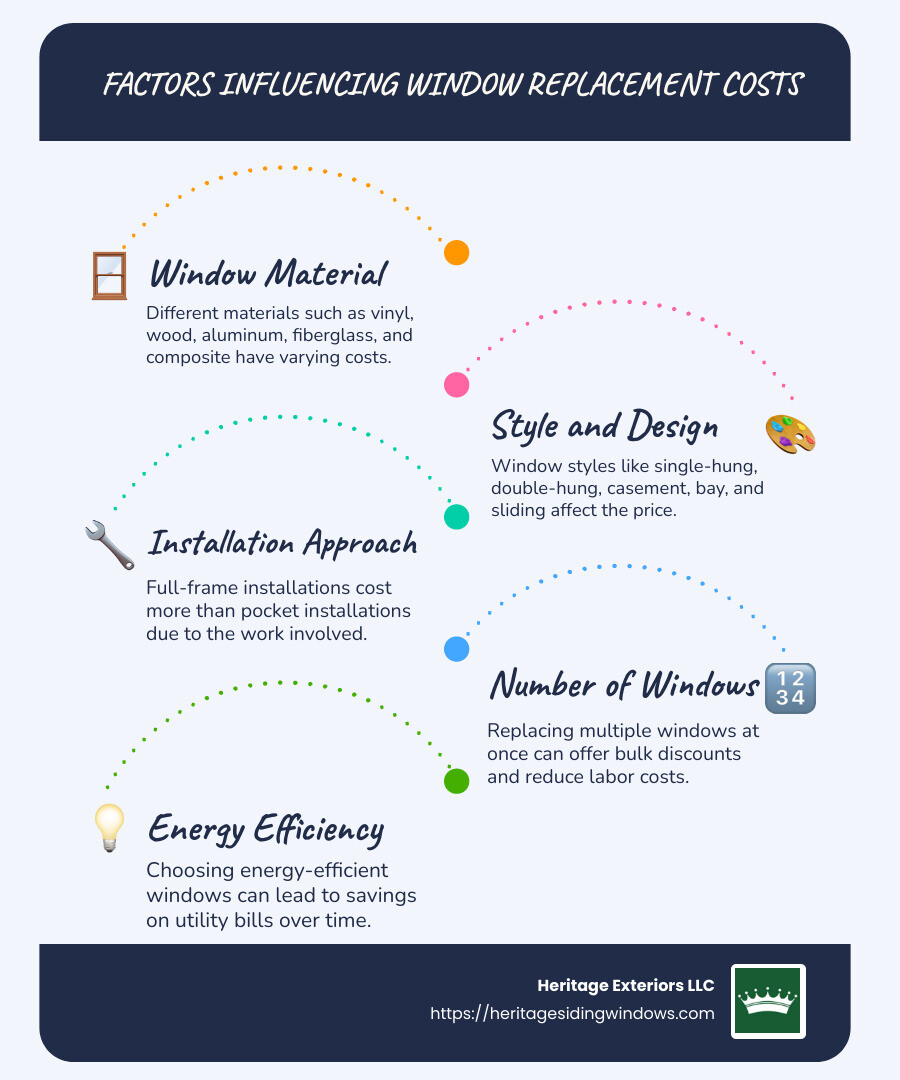
- Window Material: Vinyl, wood, aluminum, fiberglass, and composite each come with different price points.
- Style and Design: Single-hung and double-hung windows are common, but casement, bay, and sliding windows offer varied costs and benefits.
- Installation Approach: Full-frame installations cost more than pocket installations due to the comprehensive work involved.
- Number of Windows: Opting to replace multiple windows at once can lead to bulk discounts and potentially lower labor costs.
Understanding these factors ensures that you’re prepared and can budget appropriately, making the investment worthwhile in both the short and long term.
As Kevin McLaughlin, the owner of Heritage Exteriors LLC in Upton, MA, I bring years of expertise in window replacement cost analysis and installations that improve homes’ value and functionality. Let’s dive deeper into understanding these cost aspects, helping you make informed decisions for your window replacement project.
Understanding Window Replacement Costs
When it comes to window replacement cost, several elements come into play. Let’s break down these factors to give you a clearer picture of what to expect.
Average Cost
On average, replacing a window can cost between $500 and $3,000 per window. This range can vary significantly based on the materials and styles you choose. For instance, opting for premium materials like fiberglass or composite frames will push you towards the higher end of the spectrum.
Key Cost Factors
Here’s what influences the cost:
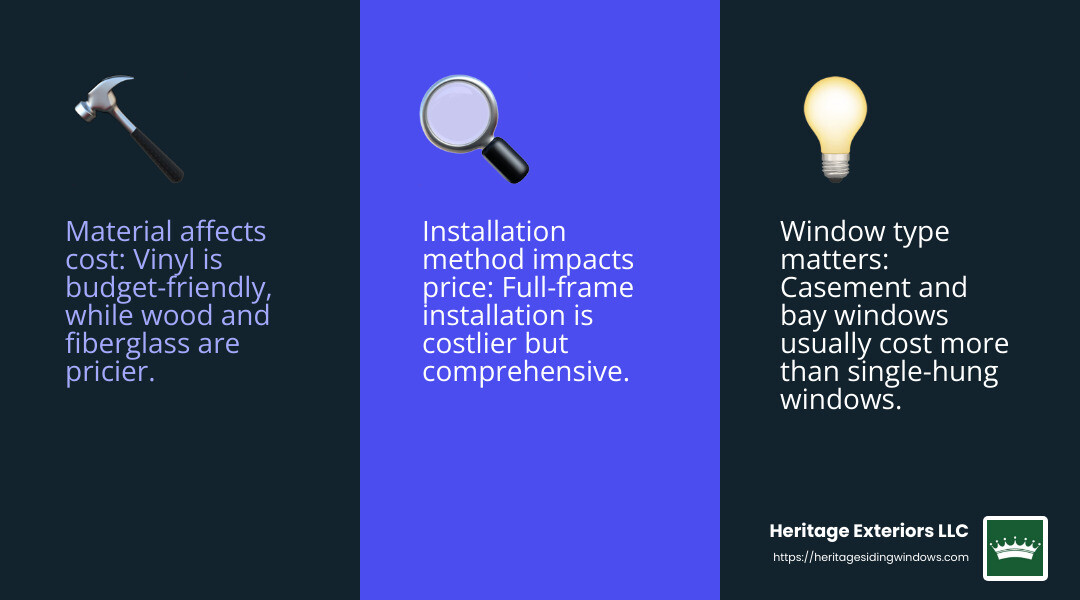
- Material: Vinyl is budget-friendly, while wood and fiberglass are more expensive. Each material offers different benefits in terms of durability and energy efficiency.
- Window Type: Styles like casement and bay windows tend to be pricier than traditional single-hung windows due to their complexity and size.
- Glass Type: Double-pane glass is standard, but upgrading to triple-pane or adding Low-E coatings can improve energy efficiency, albeit at a higher cost.
- Customization: Custom sizes, unique shapes, and specialized finishes can increase costs significantly.
Installation Costs
Installation is another major component of the total cost. Expect to pay between $36 and $153 per window for installation. The complexity of the installation and your location can affect these rates. Choosing a reputable installer is crucial, as poor installation can lead to issues like air leakage and moisture infiltration.
Installation Methods
- Full-Frame Installation: This method involves replacing the entire window, including the frame and trim. It’s more expensive but ensures a thorough update.
- Retrofit Installation: This is a more budget-friendly option that involves replacing the window sash while keeping the existing frame intact. It’s ideal if your current frames are in good condition.
By understanding these window replacement cost factors, you can make informed decisions that suit your budget and needs. Whether you’re aiming for energy efficiency or aesthetic appeal, knowing where your money goes helps in planning effectively.
Factors Influencing Window Replacement Cost
When considering window replacement cost, several key factors determine the overall expense. Understanding these can help you budget effectively and make informed choices.
Window Style
The style of window you choose significantly impacts the cost. Here’s a quick look at some popular styles:
- Single-Hung and Double-Hung Windows: These are common and generally more affordable. Double-hung windows, which open from both the top and bottom, are slightly more expensive due to their added functionality.
- Casement Windows: These windows open outward with a crank. They tend to be more expensive than single-hung windows due to their design and hardware.
- Bay and Bow Windows: These are larger and more complex, often serving as a room’s focal point. They are among the pricier options due to their size and installation complexity.
Material
The material of the window frame is another major cost factor:
- Vinyl: A cost-effective and energy-efficient option, making it popular among homeowners.
- Wood: Offers a classic look and excellent insulation but requires more maintenance and is generally more expensive.
- Aluminum: Known for its durability and sleek design, but it’s less energy-efficient and can be prone to condensation.
- Fiberglass: Combines strength and energy efficiency, often at a higher cost than vinyl or aluminum.
Brand
The brand you choose can also affect the cost. Brands known for high-quality materials and energy efficiency may have higher prices. However, they often offer better warranties and customer service, which can be worth the investment.
Installation Costs
Installation is a significant part of the overall window replacement cost. Factors that influence installation expenses include:
- Complexity of Installation: Windows on higher floors or in hard-to-reach areas may cost more to install.
- Seasonality: Replacing windows in the off-peak season can sometimes result in lower labor costs.
- Labor Rates: These can vary by region, with urban areas typically seeing higher costs.
By considering these factors—window style, material, brand, and installation—you can better understand and manage your window replacement budget. This knowledge helps ensure you get the best value for your investment, whether you’re prioritizing aesthetics, energy efficiency, or durability.
Window Replacement Cost by Material
When it comes to window replacement cost, the material of the window frame is a crucial factor. Each material comes with its own set of benefits and price ranges. Let’s explore the most common options: vinyl, wood, aluminum, fiberglass, and composite.
Vinyl
Vinyl windows are a popular choice due to their affordability and durability. They typically range from $300 to $1,700. Vinyl is known for its low maintenance and energy efficiency, making it a great option for budget-conscious homeowners. However, vinyl windows have limited color options and can warp in extreme temperatures.
Wood
Wood windows offer a classic, timeless look and excellent insulation. They tend to be more expensive, with prices ranging from $300 to $2,000. While they can be customized with paint or stain, wood windows require regular maintenance to prevent warping and rot. Despite the higher initial cost, many homeowners appreciate their aesthetic appeal.
Aluminum
Aluminum windows are valued for their strength and slim profiles, allowing for larger glass areas. They generally cost between $400 and $900. While highly durable and low maintenance, aluminum is not the best insulator and can be prone to condensation. It’s a good choice if you prioritize sleek design over energy efficiency.
Fiberglass
Fiberglass windows combine durability and energy efficiency, often priced between $300 and $1,900. They are strong, resistant to warping, and can be painted to match your home’s decor. Although more expensive than vinyl, fiberglass offers excellent insulation and low maintenance, making it a worthwhile investment for long-term savings.
Composite
Composite windows blend wood fibers and polymers, offering the look of wood with lower maintenance. Prices for composite frames range from $400 to $1,900. They are energy-efficient and durable, but the quality can vary significantly by manufacturer. If you want the appearance of wood without the upkeep, composite windows might be your best bet.
Understanding the pros and cons of each material can help you make an informed decision that aligns with your budget and home needs. Whether you prioritize cost, aesthetics, or energy efficiency, choosing the right material is key to a successful window replacement project.
Window Replacement Cost by Style
The style of your window plays a significant role in determining the overall window replacement cost. Each style offers different benefits and comes with its own price range. Here’s a breakdown of some popular window styles:
Single-Hung Windows
Single-hung windows are one of the most affordable options available. With a fixed upper sash and a movable lower sash, they offer basic functionality at a lower cost. Prices typically range from $200 to $3,800 per window. They are a great choice for homeowners looking to keep costs down while ensuring basic ventilation.
Double-Hung Windows
Double-hung windows are a step up from single-hung windows. They feature two movable sashes, allowing for better ventilation options. This added functionality comes at a slightly higher cost, usually between $350 and $4,200 per window. Double-hung windows are versatile and commonly found in bedrooms and living rooms.
Casement Windows
Casement windows open outward with a crank and are hinged on the side. They provide excellent ventilation and unobstructed views. Prices for casement windows generally range from $450 to $5,000 per window. They are ideal for areas where you want to maximize airflow, such as kitchens or bathrooms.
Bay/Bow Windows
Bay and bow windows are known for their ability to extend outward, creating more interior space and offering panoramic views. These windows are among the most expensive styles, with costs ranging from $5,000 to $15,000 per window. They add elegance and light to any room, making them a popular choice for living areas.
Sliding Windows
Sliding windows, which open horizontally along a track, provide a modern look and are easy to use. They are a practical choice for rooms with limited space. The cost for sliding windows typically falls between $200 and $3,800 per window. They are a great option if you want a sleek design without breaking the bank.
Choosing the right window style involves balancing cost, functionality, and aesthetics. Whether you opt for the affordability of single-hung windows or the elegance of bay windows, understanding the cost implications can help you make the best decision for your home.
Frequently Asked Questions about Window Replacement Cost
How much should you spend on replacement windows?
When planning for window replacement, the average cost per window, including installation, typically ranges from $1,000 to $1,500. This can vary based on factors such as the window’s style, material, and glass type. For instance, opting for energy-efficient double-pane or triple-pane windows with low-e coatings might increase the initial expense but can save on energy bills in the long run.
Glass type plays a significant role in the cost. Double-pane windows offer a good balance between cost and efficiency, while triple-pane windows, though pricier, provide superior insulation and noise reduction. It’s crucial to weigh these benefits against your budget and long-term savings.
Is it cheaper to replace all windows at once?
Yes, replacing all your windows at once is often more cost-effective. This approach can lead to cost efficiency in several ways:
- Labor Costs: Contractors can work more efficiently, reducing the overall time and expense. This can lower labor costs significantly.
- Bulk Discounts: Many suppliers offer bulk discounts for large orders. This means you might pay less per window if you’re replacing multiple windows simultaneously.
- Long-Term Savings: New windows can improve energy efficiency, potentially reducing your energy bills by up to 12% annually, according to Energy Star. This can add up to significant savings over time.
What is a good price to install a window?
The average price for window installation ranges from $36 to $153 per window. However, this can vary based on the complexity of the installation and the type of window. For example, installing a standard double-hung window is generally less costly than a custom bay window.
Cost factors include:
- Window Type and Size: Larger or more complex windows, like bay or bow styles, usually incur higher installation costs.
- Installation Complexity: Older homes or those requiring structural adjustments may lead to increased labor costs, sometimes by an additional 20% to 30%.
- Installer Experience: Hiring a reputable installer ensures quality work, which can save money in the long run by preventing issues like air leakage or moisture infiltration.
Understanding these factors can help you budget more accurately for your window replacement project, ensuring you get the best value for your investment.
Conclusion
When it comes to window replacement, choosing the right partner can make all the difference. At Heritage Exteriors LLC, based in Worcester and Middlesex County, MA, we pride ourselves on delivering exceptional value and a superior customer experience. Our commitment to quality and service ensures that your investment in new windows not only improves your home’s appearance but also boosts its energy efficiency.
Why Choose Heritage Exteriors LLC?
- Expertise and Experience: With years of experience in the industry, our team knows how to handle any window replacement project, whether big or small. We understand the unique needs of homes in Massachusetts and tailor our services accordingly.
- Quality Materials: We only use top-quality materials that ensure long-lasting beauty and performance. Our windows are designed to withstand the local climate while providing excellent insulation.
- Customer Satisfaction: Your satisfaction is our top priority. From the initial consultation to the final installation, we work closely with you to ensure every detail is perfect. Our team goes the extra mile to exceed your expectations.
- Value for Money: We understand that window replacement is a significant investment. That’s why we focus on delivering not just high-quality products but also exceptional value. We offer competitive pricing without compromising on quality.
By choosing Heritage Exteriors LLC, you’re not just getting new windows—you’re investing in a company that values your home’s safety, aesthetics, and energy efficiency. If you’re ready to upgrade your home with the best windows, contact us today to get started!